Japanese Chin Dog
A Toy Dog Breed With Cat-like Traits
The Japanese Chin dog was previously known at the Japanese Spaniel, but since it bears no relation to a spaniel, its name was changed in 1977 to clarify its identity, heritage and unique characteristics.
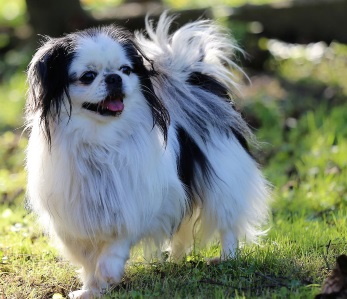
The Chin, as he is often called, is thought to have originated in China, but developed mainly in Japan, specifically for royalty.
How these toy dog breeds arrived there is a matter of debate, though it is speculated that they may have accompanied Chinese monks who migrated to Japan around the 5th century.
Dogs with a strong likeness to the Chin have been seen depicted in ancient artifacts and embroidery found in China, lending support to the early history of this breed.
The Japanese Chin is considered by many to be a descendant of dogs that were revered pets of the Chinese aristocracy.
They are very ornate and compact in appearance with large expressive eyes and a lot of feathering throughout their
substantial coat. Their expression is both exotic, appealing and a little on the proud side.
At one point the Japanese nobility favored a much smaller Chin and gave them Saki to retard their growth. Those that weighed less than three pounds were highly revered as they could fit into the sleeves of kimonos.
In 1854, Japanese Chins, that had been secluded in Japan up to that point, were exported out of the country for the first time. Shortly thereafter, Queen Victoria became gifted with two of them.
Later on Queen Alexandra, the wife of
King Edward VII, son of Queen Victoria, received a Chin and became an ardent collector of them. This link to the royal family greatly increased the Chin's popularity in England and Europe.
In 1888, the American Kennel Club (AKC) recognized the Chin under its former name - Japanese Spaniel as part of the toy dog group.
The Japanese Chin is closely related and shares similar roots to another small dog breed - the Pekingese.
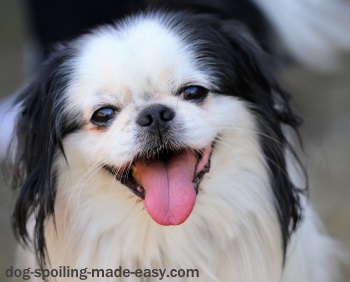
Characteristics of the Japanese Chin
Although the Japanese Chin dog breed seems like the perfect lap dog, it also has a reputation as a very attentive watchdog.
Interestingly, it is one of the quietest dogs and while not a barker, when it does sound the alarm, its bark is surprisingly quite deep and serious sounding.
The Chin is an intelligence dog that can respond to training quite
quickly, but they can also be a bit independent, so consistency is important to let them know you mean business.
That being said, this little dog aims to please and will do well if the training approach is gentle with lots of praise and positive reinforcement methods are used. Chins also are generally quick to catch on to house training as they are a naturally clean breed.
The Japanese Chin is a lap dog to the extent that he loves to be spoiled and snuggled! He is a very affectionate dog and makes a loyal and interesting companion, though he is discerning with strangers.
The Japanese Chin is known for its good-natured, charming and playful temperament. They are quite entertaining and enjoy being around people, often forming strong bonds with their families.
While generally friendly, early socialization is recommended to ensure they are comfortable around new people and other pets. Supervised play dates with other dogs can be helpful in this regard.
Despite their small size, they have a tendency to take charge so if you have other pets in the home, socialization is especially important.
Overall, they thrive on companionship and love to be involved in family activities.
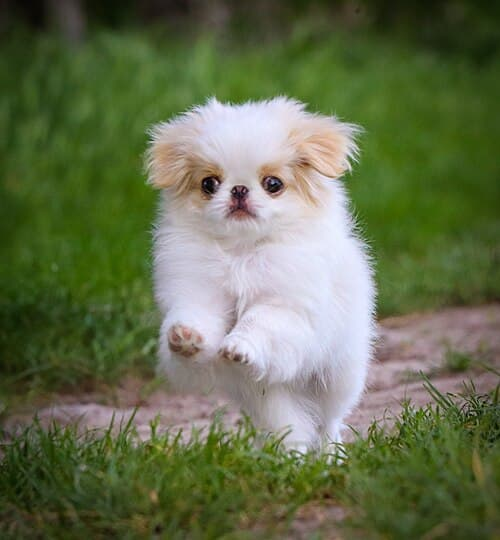 Petites Perles Enchantées
Wikimedia Commons
Petites Perles Enchantées
Wikimedia CommonsHealth of the Japanese Chin Dog Breed
When it comes to the health of this breed, respiratory and heart conditions are the most common concerns. Because of the brachycephalic flattened short muzzle, they are also more prone to breathing challenges, as well as overheating, during humid hot weather.
Ophthalmic Issues: The Chin has large and prominent eyes which make them susceptible to scratches as well as more serious eye conditions. Rolled-in eyelids and cataracts are somewhat common in the breed.
Inherited genetic issues that can affect the Japanese Chin dog include:
- Luxating patellas a
condition involving the kneecap slipping out of place.
- Heart murmurs.
Other issues include:
- Cataracts
- Epilepsy
- Dental Issues typical with smaller breeds whose teeth can be too crowded.
Regular vet check-ups are important for monitoring the Chin's health to catch any issues early. Preventative care includes vaccination boosters and regular dental inspection and cleanings when necessary.
The National Breed Club recommends breeders have these health tests completed:
- Patella Evaluation
- Cardiac Exam
- Ophthalmologist Evaluation
- GM2 Gangliosidosis (Japanese Chin) - DNA Test
With regular vet check-ups, a balanced high quality diet, and adequate exercise, pet parents can expect their Japanese Chin to stay happy and healthy and enjoy them for 10–12 years.

Appearance & Care
Height: 8-11 inches
Weight: 7 to 11 lbs.
Coat Colors: Black/white or red/white, or black and white with tan points
Life Span: 10 to 12 years


This sturdily built little dog,
with his
profuse feathered tail and expressive eyes, has an aristocratic appearance which seems to reflect his royal heritage.
The Chin is a fastidiously clean dog and has the unusual habit of using its paws - much like a cat - to wash its
face.
Having said that, your help is still required for the largest share of grooming!
The Chin has a very full single coat that is straight and silky. To prevent tangles and maintain its condition, invest in a good quality boar brush and brush the coat 1 to 2 times a week and more often during shedding seasons.
While shedding is about average, the loose hair does need to be removed to prevent it turning into a mat.
Bathing the Chin once a month will usually take care of keeping their coat clean and healthy. Applying a conditioner after bathing will make it easier to comb out.
Trim the nails when necessary to prevent discomfort and avoid mobility issues. Chin's are known for having fast-growing nails. Fur on the foot bed should also be trimmed of excess fur, otherwise no extra trimming is needed.
Gently clean around the eyes to remove any debris and prevent staining or infection. Also inspect the ears for mites and them of any residue or excess wax. Brush teeth daily, if possible, to prevent dental issues common to small breeds.
How Active Is The Chin?
The Chin dog breed requires almost no daily exercise if allowed to romp freely around the house while bearing in mind, he does like to climb - much like a cat.
However, while Chins are a relatively a low-energy breed, it is still recommended that they be taken out for short walks because every dog needs to have mental and physical stimulation to maintain good health.
Play sessions are beneficial and interactive toys and games can provide a mental challenge for the intelligent Chin.
Surprise the Chin by changing up his routine or introducing new activities to help prevent boredom.
Also, providing a variety of toys, such as puzzle toys and soft plush ones will keep things interesting for your pup.
Living Space
The Chin doesn't need a lot of space and doesn't make a lot of noise which fits in very well with apartment living or any other setting.
While they don't require a large yard, any outdoor space is an advantage for training without distraction, sniffing the bushes and potty breaks, but don't leave him unattended because his small size could attract predators.
Chins are sensitive to harsh weather, so avoid taking them out when the weather is bad and/or cold. While indoors, a reasonably comfortable temperature free from drafts is ideal.
The Japanese Chin With Children?
The Chin is a delicate dog and not recommended for active children, but could be a nice pet for a child who is gentle with animals. The Chin does not like rough handling.
Teaching kids how to interact with them respectfully is important.
As always, the best policy
whichever breed of dog you choose, is to have an adult supervise any interaction between children and the household
pets.
Senior Or Less Active Families?
Low exercise demand, loving, loyal, smart and clean makes the Japanese Chin dog the ideal companion for seniors, more sedentary or housebound individuals.
Chins can bring joy and companionship into anyone's life. Their playful antics and very affectionate nature makes them a fun pet to have around.
Handling the grooming needs would be the only variable to consider.
Where to Buy or Rescue a Japanese Chin
Before you decide to add a Japanese Chin to your family, please do thorough research to make sure the breed is right for you. When you are ready to purchase or rescue, the following reputable organizations will help youto find one:
- AKC Marketplace - 100% AKC puppies from AKC-Registered litters
- Japanese Chin Club of America - Breeder Referral
- Luv A Chin Rescue - Rescue. Forever Foster, Adoptions
These organizations are reliable places to help you find a Chin puppy or adult to adopt, rescue, or buy.
If purchasing a purebred Japanese Chin puppy from reputable breeder, expect to pay between $1000 and $3,000 depending on several factors, such as health testing, pedigree, breed type, reputation of the breeder and your location. Many breeders on platforms like the AKC Marketplace charge around $2,000 on average.
It is recommended to avoid casual (or backyard) breeders, since these breeders may not prioritize the health of the puppies or perform proper health testing on the parents.
FAQs
How do you train a Japanese Chin?
How do you train a Japanese Chin?
The best way to train a Chin is using a positive reinforcement approach. Treats and praise get better results.
How much exercise does the Japanese Chin need?
How much exercise does the Japanese Chin need?
A short daily walk and some play time around the home.
Is the Japanese Chin good with children?
Is the Japanese Chin good with children?
The Chin does best with children who have been taught how to be gentle with delicate pets. They do not like rough handling.
How much grooming does the Chin need?
How much grooming does the Chin need?
The Chin is a naturally clean dog and their grooming needs are below average and easy to maintain.
Before You Go...
If you like the content of this page, as well as others on my site, please give it some love by clicking on the heart in the lower right hand corner. This helps me keep providing enjoyable and useful content.
Thank you.
You might like these
Popular Dog Breeds - Tell Us About Your Special Favorite!
Popular dog breeds - You're invited to tell us about your favorite dog breed and what makes him or her special to you.
West Highland White Terrier | Charming and Opinionated Small Dog!
The West Highland White Terrier is a bold and hardy earth dog developed in Scotland as a hunting terrier. Learn more about the origins of this popular dog.
Welsh Springer Spaniel - High Spirited Sporting Dog!
Welsh Springer Spaniel, full profile of the breed including origins, traits, health, personality, and training tips.

- Home
- Miniature Breeds
- Japanese Chin Dog



Budget Friendly
Link To Us
... here if you like the content at Dog Spoiling and think it would be valuable to others 😊