Irish Wolfhound Breed Guide: Size, Traits and Care
The Irish Wolfhound is best known for its enormous size and noble appearance. In fact, it is the tallest dog breed in the world, yet despite its impressive build, it is also known for being gentle and even-tempered.
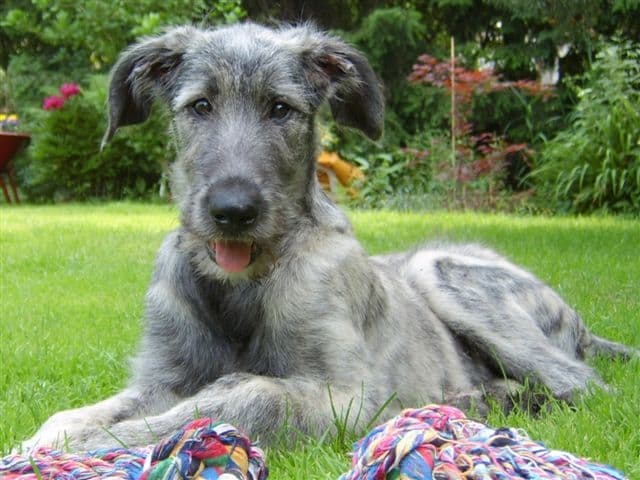
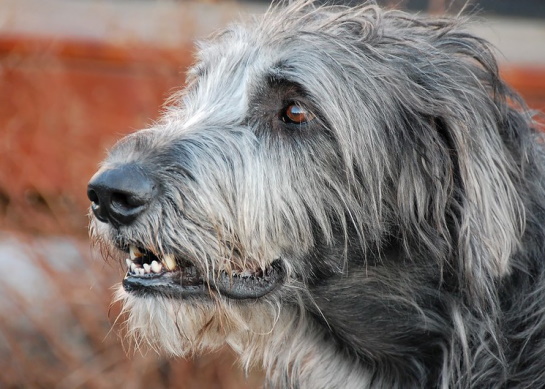 Aodhan (pronounced Aiden)
As its name suggests, this breed has deep roots in Ireland, where it was valued for both its strength and courage. For centuries, Irish Wolfhounds were used in war, to guard property, and to hunt large game such as wolves, boar, and elk.
As a sighthound, the breed was developed to hunt by sight rather than scent, which helps explain its speed, power, and ability to cover ground quickly.
The exact origins of the Irish Wolfhound are not completely clear, but the breed was already admired in ancient times. Historical records show that the Romans were fascinated by these hounds as early as the 4th century. At one time, they were so highly prized that only nobility were allowed to own them, and they were considered valuable enough to be the cause of conflict and even war.
By the 17th century, the breed had nearly disappeared after wolves in Ireland had been largely wiped out and the hounds were no longer needed for their original purpose. Fortunately, the Irish Wolfhound was later revived through the efforts of Captain George Graham, who played a major role in restoring the breed and helping to establish the Irish Wolfhound Club.
The American Kennel Club recognized the breed in 1897.
Today, the Irish Wolfhound is admired not only for its history and striking size, but also for the strength, grace, and hunting instincts that remain part of its character.
Characteristics of the Irish Wolfhound
The Irish Wolfhound is often called a gentle giant, and that description really does fit. In spite of their tremendous size, these dogs are known for being affectionate, patient, and surprisingly soft-natured. Many people lovingly call them Wolfies, and it’s easy to see why they make such devoted companions.
Wolfhound puppies take longer to mature, but they still need proper obedience training and socialization beginning at as young an age as possible. To become a well-rounded, confident adult, their socialization, should be adventurous and include meeting people of all ages, plus a wide variety of places and situations.
Wolfhounds are best suited to families who have previous experience with large breeds. They are generally intelligent and eager to please, which means they usually respond well to training.
Because of their kind temperament, a harsh approach is not needed. In fact, they tend to do best with steady, consistent guidance and a positive training methods.
Irish Wolfhounds are also known for being brave, but they are not typically big barkers. They are not natural watchdogs in the usual sense, although their sheer size alone would probably make most intruders think twice.
Like many hounds, they have strong hunting instincts, so care should be taken around smaller animals such as rabbits and other similar pets. Some Irish Wolfhounds can live peacefully with cats, but this can vary from dog to dog.
IWs may become especially attached to one person, although they can bond well with the whole family too. A good way to encourage that is for each family member to take part in the dog’s daily care, whether that means feeding, grooming, walking, or spending quiet time together.
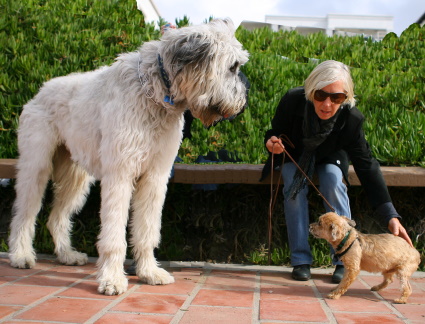
Appearance and Grooming
The Irish Wolfhound is a truly impressive dog, with a tall, powerful build that is hard to miss.
Height: 32-34 inches
Weight: 90-120 pounds, although some can be even larger.
Color variations:
Irish Wolfhounds come in several colors, including red, black, white, fawn, gray, and brindle.
Their size is one of the breed’s most striking features, but they also
have a graceful, dignified look that gives them a very special presence.
The Irish Wolfhound has a rough and hard double coat comprised of a wiry top coat and a soft undercoat. It is is wiry on the head, body, and legs, with especially long hair over the eyes and under the jaw. .
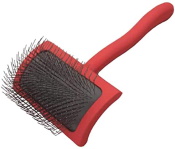
Even though the coat is not especially fancy, it does need regular care with a high quality slicker brush to keep it looking its best. Brushing and combing on a routine basis will help remove loose hair and prevent tangles. You may also need a leave-in conditioner/detangling spray to help with mats. If you do, give Ice on Ice a try.
Keep the ears clean including the areas around them and feet neat and trimmed. Brush teeth daily if possible and regular nail care is important too. If you're nervous about nail trimming, a dremel is very useful and easy to use. Bathe your Wolfie about once a month or more often if needed.
Because this dog grows into such a giant, it really helps to introduce grooming habits early while your Wolfhound is still a puppy and more manageable.
Getting them comfortable with brushing, combing, handling their feet, and general tidying when they are young can make grooming much easier later on.
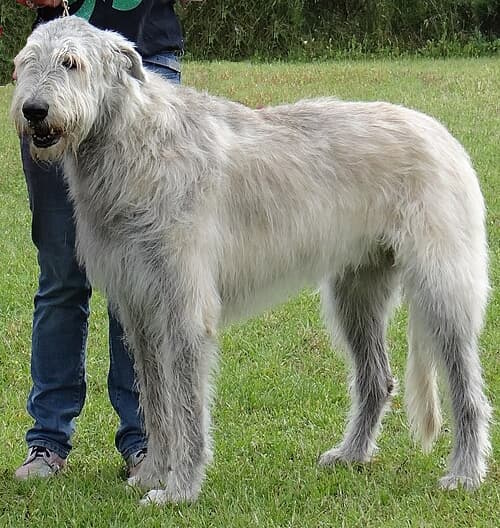 Credit: Anne Jea, Wikimedia
Irish Wolfhound Health
While the IW's size makes him unique, it's also makes his lifespan relatively short, similar to many large dog breeds. According to the AKC (American Kennel Club), the IW's life expectancy is 6 to 8 years. However, in 2024 a study in the UK reported a life expectancy of 9.9 years for the breed.
Here are some of the health issues associated with the Irish Wolfhound:
- Cancer, particularly osteosarcoma: A serious aggressive cancer generally affecting the leg bones.
- Dilated Cardiomyopathy (DCM): An inherited disease that affects the heart muscle and is often treatable.
- Bloat: Otherwise known as gastric dilatation-volvulus (GDV), is a life-threatening condition affecting large breed dogs where the stomach fills up with food or air and twists. This condition requires immediate emergency care.
- Pneumonia: A serious lung inflammation causing fluid buildup and breathing difficulties.
- Liver shunt: An abnormal blood vessel that allows blood to bypass the liver, which can lead to a buildup of toxins in the bloodstream. Breeders should screen puppies for this disorder at 8-10 weeks of age.
- Progressive Retinal Atrophy: This inherited disorder results in vision loss and eventually blindness with no cure. However, genetic screening is available.
- Hip Dysplasia - A genetic joint disease that results from the malformation of the hips and is characterized by joint weakness, stiffness, and pain. Also, Elbow Dysplasia affecting the elbow joint with similar symptoms and potential arthritis.
With regular veterinary checkups and guidance along with excellent home care, many of these conditions can be managed, but it is essential to consult a veterinarian whenever signs of these illnesses occur.
Here are the recommended Health Tests From the National Breed Club:
- Hip Evaluation
- Elbow Evaluation
- Cardiac Exam
- Ophthalmologist Evaluation
- Serum Bile Acids
When seeking a puppy, be sure to ask your breeder what health tests have been done for inheritable diseases.
 Credit: Hanna Woźna
Exercise and Activity Level
The Irish Wolfhound may be huge, but that doesn’t mean this breed is constantly full of energy indoors. In fact, adult Wolfhounds are often fairly relaxed in the house and can be quite laid-back once their exercise needs are met.
That said, this is still a large, athletic breed with a natural instinct to run and chase. They enjoy having space to stretch out and, when it’s safe, the chance to move freely.
Many also make wonderful walking companions, and some can even enjoy running with their owners once they are fully mature and properly conditioned.
One very important thing to remember is that Irish Wolfhound puppies grow quickly, and their developing bones and joints need protection. Long walks and strenuous exercise should be limited during the early months to help reduce the risk of skeletal problems.
Puppies should still have time to play, of course, but it’s best not to overdo it. Plenty of rest is just as important during this fast growth stage.
As adults, Irish Wolfhounds do need daily exercise, but they are not usually hyperactive dogs. A sensible routine with long walks, some room to move, and regular companionship will usually suit them well.
Ideal Living Space
The Irish Wolfhound needs plenty of room to move comfortably, both inside the home and outdoors. Because this is such a large breed, a cramped space can quickly become difficult for both dog and owner.
A home with a good-sized yard is ideal, giving your Wolfhound space to stretch out and move around more freely. Keep in mind that Wolfhounds have a strong prey drive and make sure the yard is securely fenced. An invisible fence won't do and won't keep other animals out.
Even so, this is not a dog that wants to be left outside for long periods. Irish Wolfhounds are happiest when they are close to their people and included in family life. They enjoy companionship and do best in homes where they can be near the ones they love.
It’s also worth remembering just how big and strong the Wolfies are. Their size alone can accidentally send small tables, decorations, or treasured items tumbling, so a little extra space - and a bit of strategic decorating - can save you some heartbreak.
Irish Wolfhounds With Children
Irish Wolfhounds are usually very good with children when properly trained. They are often gentle, patient, and affectionate, which is one reason so many people are drawn to the breed as a family companion.
That said, their large size should never be overlooked, especially around toddlers or very young children. Even the sweetest Wolfhound can accidentally knock over a small child without meaning to, simply because of their height and strength.
As with any dog, children should always be taught how to behave respectfully around pets, and playtime should be supervised. With sensible guidance and proper supervision, the Irish Wolfhound can be a loving and loyal companion for families with children.
Are Irish Wolfhounds a Good Fit for Seniors or Less Active Families?
The Irish Wolfhound is not usually the best choice for inactive seniors or families with a very sedentary lifestyle. While these dogs can be calm and relaxed in the home, they are still a giant breed that needs daily walks, regular handling, and enough strength from the owner to manage their size.
Caring for such a large dog can be physically demanding at times, whether that means walking, grooming, helping them in and out of vehicles, or simply managing everyday life with a dog of this size.
For people who enjoy a more active routine and feel confident handling a very large breed, the Irish Wolfhound can be a wonderful companion. But for those who prefer a quieter, less physically demanding pet, this may not be the easiest match.
Where to Buy or Adopt An Irish Wolfhound
Before you decide to buy or adopt an Irish Wolfhound, try to attend a dog show where IWs are being shown. This will give you a closer impression of the breed and its size plus an opportunity to talk to breeders. Another thing to consider is that IWs are fairly expensive dogs to properly maintain in all these areas: food, grooming, dog beds, boarding, licenses etc., and most importantly in the case of the IW, regular veterinary visits and medicines they may require.
Health insurance would be a very good investment for this breed.
But, if and when you are ready to purchase or rescue an Irish Wolfhound, the following reputable organizations will help you to find a puppy or adult:
- AKC Marketplace - 100% AKC puppies from AKC-Registered litters (Also find groomers and trainers here)
Irish Wolfhound Club of America - maintains a breeder directory and contacts by region - Irish Wolfhound Rescue
When purchasing a purebred Irish Wolfhound from a reputable breeder, expect to pay between $1,400 to $2,500, but can go up to $6,200 depending on several factors, such as champion bloodlines, health testing, pedigree, reputation of the breeder and also your location. Purchasing a healthy puppy from an ethical breeder means the health of the litter is a priority.
When meeting with a breeder expect to meet the parents of the puppies and view the environment in which they are being cared for. Have some questions ready such as: what the parents are like, if the puppies have started socialization and if the breeder is available for later support.
It is recommended to avoid casual (or backyard) breeders, since these breeders may not prioritize the health of the puppies or perform proper health testing on the parents. Health is very important when considering a IW because they are prone to several health conditions.
FAQs
Are Irish Wolfhounds good family dogs?
Are Irish Wolfhounds good family dogs?
Yes, Irish Wolfhounds are often wonderful family dogs. They are usually affectionate, patient, and gentle, which is why they are so often called gentle giants. Because they are such a large breed, supervision is always important around very young children.
Are Irish Wolfhounds easy to
train?
Are Irish Wolfhounds easy to
train?
Irish Wolfhounds are generally intelligent and eager to please, so they usually respond well to training. They do best with a kind, consistent approach rather than harsh correction. Starting early is especially helpful because an adult Wolfhound is a very large dog to manage.
Do Irish Wolfhounds bark a lot?
Do Irish Wolfhounds bark a lot?
No, Irish Wolfhounds are not usually known for barking a lot. They tend to be fairly quiet dogs. Even so, their size alone is often enough to make people take notice.
Are Irish Wolfhounds good with other pets?
Are Irish Wolfhounds good with other pets?
They can be, but it depends on the individual dog and the type of pet. Because Irish Wolfhounds were bred for hunting and have strong chase instincts, care should be taken around small animals such as rabbits. Some do well with cats, but that can vary.
Do Irish Wolfhounds need a lot of grooming?
Do Irish Wolfhounds need a lot of grooming?
Their coat is not high-maintenance compared to some breeds, but it does need regular brushing and combing. Keeping the coat tidy, trimming around the ears and feet, and taking care of the nails will help keep your Wolfhound comfortable and looking neat.
Is the Irish Wolfhound a good choice for first-time dog owners?
Is the Irish Wolfhound a good choice for first-time dog owners?
It can be, but only if the owner is prepared for the realities of living with a giant breed. Irish Wolfhounds are usually sweet-natured, but their size, exercise needs, training, and grooming all require commitment. For someone willing to learn and put in the time, they can be very rewarding companions.
Before You Go...
If you like the content of this page, as well as others on my site, please give it some love by clicking on the heart in the lower right hand corner. This helps me keep providing enjoyable and useful content.
Thank you.
Further Reading

Irish Wolfhound Bible
Perfect Guide To The Breed
- Home
- Dog Breeds
- Irish Wolfhound
flickr.com/photos/ranieldiaz/6371459005/ License: creativecommons.org/licenses (CC BY 2.0)
Irish Wolfhound "Aodhan" flickr.com/photos/25113263@N02/2370058078/in/album-72157604293107321/ creativecommons.org/licenses 2.0 Generic (CC BY-NC-ND 2.0)
Anne Jea., CC BY-SA 4.0, via Wikimedia Commons
Hanna Woźna - Gil, CC BY-SA 3.0 , via Wikimedia Commons

Budget Friendly

.jpg)
Link To Us
... here if you like the content at Dog Spoiling and think it would be valuable to others 😊