Papillon Dog Breed aka The Butterfly Dog
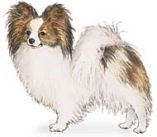
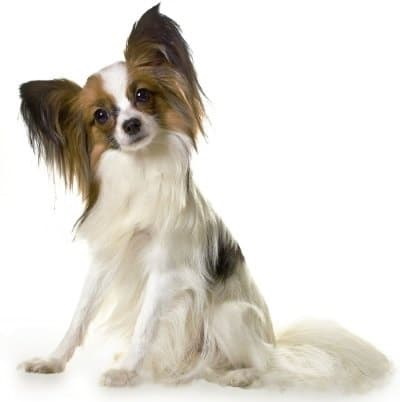
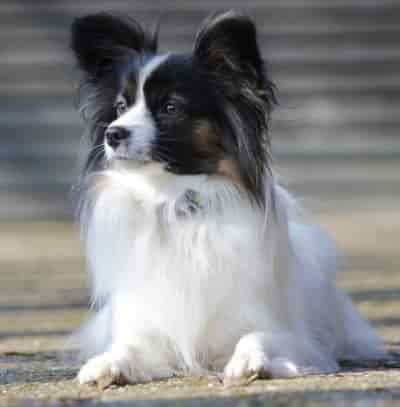
The Papillon dog breed is a lively, charming and very dainty small breed that is easily recognized by its distinctive ears, which stand straight up and resemble spread out butterfly wings - hence its French name which means Butterfly.
A variation of the Papillion dog is the Phalene, which has dropped ears - and whose name refers to a moth which folds its wings down at rest.
Origins
Although the Papillon dog breed was popular in England, France and Belgium, there is considerable debate about the breed's actual country of origin.
Ancestors of the Papillon dog are believed to include several varieties of toy spaniels. Some sources claim a dwarf Spanish spaniel as the primary ancestor, while others point to the Epagneuls Nains of Belgium.
They appear in European art as early as the 1300’s, and portraits by man
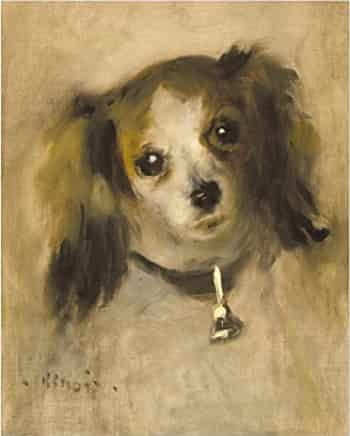
This breed was very popular with the French aristocracy at the time of Marie Antoinette who, it is said, enjoyed owning one of them. Their likeness has also been captured in numerous paintings by many famous artists dating as far back as the 13th Century.
One such more recent example is the painting shown below that was painted by Pierre-Auguste Renior in 1870.
One interesting fact about the elegant Papillon dog breed is that they are thought to have extra-sensory perception.
In 1999 the breed earned a claim to fame by winning Best in Show at the Westminster Kennel Club dog show.
Papillons were first seen in the United States during the latter part of the 19th century. The breed was initially recognized by the American Kennel Club (AKC) in 1915 and a Papillon Breed club was formed in 1935.
Papillon Health Profile
While the Papillon dog breed is generally considered to be a very healthy one and live a
relatively long life, in some cases up to seventeen years, there are a few health
concerns associated with this toy dog.
One of the top issues has to do with dental related problems. As to be expected, the
Papillon's teeth are small as are the roots. Small teeth and small jaw bones seem to
coincide with greater tooth loss in toy dogs, if and when the pet should develop a
gum disease such as gingivitis.
While preventative dental care, including regular
brushing and tartar removal is necessary for all dogs, it is of even greater
importance for this little dog.
In addition to tooth loss, oral problems can lead to infections and in turn to other significant diseases affecting the major organs.
Other health conditions that occur more commonly include:
- Luxating Patella, or slipped kneecap in the rear legs, which is believed to be a genetic issue. Of course, this delicate boned dog is also more prone to broken bones, so care should be taken to protect him from activities that may increase the risk for injury.
-
Papillon dog breed is Progressive Retinal Atrophy is another potential issue which is noteworthy because it can cause
blindness.
- Those interested in acquiring a Papillon puppy would want to ask about the health history of the parents with respect to eye and joint conditions and to make sure that the have been certified to be clear of these diseases.
In addition to the issues mentioned, anesthesia can be more troublesome for this small dog.
 Renoir Papillon Art Print
Characteristics of the Breed
The Papillon dog breed is a very affectionate dog and is known for
forming close bonds with its human family. In fact, they are often
referred to as velcro dogs because they like to follow owners around the
house, getting in the middle of everything.
This delightful small dog is an excellent companion dog that is quite
protective - as such, it also follows that they can be barkers.
Early training is needed to prevent them from becoming nuisance barkers which shouldn't be a problem since they are quick learners and thrive on both mental and physical challenges.
Papillons are hardy dogs and considered to be in the top ten of the smartest breeds according to Dr Stanley Coren, an expert on animal intelligence.
Being quite athletic and agile, they are a good choice if you are interested in training them for competitive obedience, or agility in which they can hold their own.
Appearance, Coat and Care
Height: 8-11 inches
Weight: 8-10 pounds
The Papillon dog breed is delicate in
structure with slender legs, a small rounded skull with eyes appearing on the large size, and a pointed
narrow face.
Official AKC coat colors are white and black, white and lemon, white and red, white and sable, or tri-color (white, black and tan). More often the coat colors we see are predominantly white with patches of black or brown.
This breed is very clean and self-grooming. There is no undercoat and shedding is about average.
Although the coat is long and silky, it
doesn't require a great deal of grooming - just brushing a couple of times a
week with a boar brush to keep it orderly. This will smooth the hair and distribute the natural oils while removing any dander.
However, this flowing coat left unattended, could easily develop a problem with mats.
Brushing the Papillon's teeth is a high priority followed by ear cleaning and nail clipping and
should be also done as part of the overall home care.
How Active is the Papillon Dog Breed?
The Papillon dog is an ever curious pet, very active and playful around the house. As such, it doesn't require a lot of additional exercise, but daily walks are always enjoyed and recommended to benefit the health of mind and body.
The dog park is another option for exercising your Papillon as, they are very athletic and are good at retrieving the usual flying objects such as balls or small frisbees.
Ideal Living Space
This breed is better suited to living in a house as they do tend to sound the alarm in response to unfamiliar noises, which might be unpopular in an apartment setting.
Aside from giving consideration to this trait, they do not require a lot of space, although a yard is always the ideal for play and other obvious necessities.
The Pap With Children?
This little dog does not like rough play and is more suited to families with older children who are very considerate of pets and gentle with them.
It is best not to have them be around small children, especially as puppies, because their bone structure is even more delicate at this stage and more prone to injury during playful activities.
Companion For Seniors?
Seniors or more sedentary owners who do not have "resident" small children or grand children will enjoy this delightful and undemanding breed.
Papillon dogs are attentive and loving and have frequently been used in therapy situations.
However it should be kept in mind that while they don't require huge amounts of exercise, they should not be kept housebound and absolutely do need get out for walks.