Chesapeake Bay Retriever
He Loves The Great Outdoors!
The Chesapeake Bay Retriever, primarily bred for duck hunting, takes its name from the bay located off the Virginia and Maryland coastline and from which its ancestors were rescued.
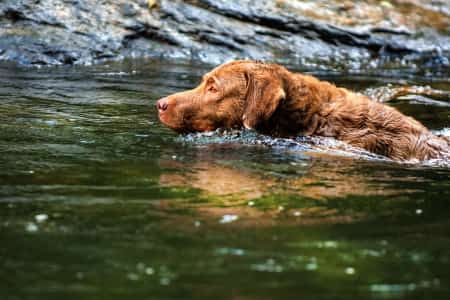 Courtesy M.Burleson
The story goes that two Newfoundland dogs, aboard an
English ship which wrecked in the bay, were rescued along with the crew members and brought to shore.
Subsequently, the
Newfies were interbred with other dogs in the area - most likely coonhounds and curly coated retrievers, which began the
development of the all American CBR that we know today.
The Chessie, as he is affectionately called, has
all the physical attributes and stamina of a dog bred for working in water and in adverse weather conditions. His body is
muscular, well-developed and protected by a dense oily coat that is weatherproof.
Early on in his development he was also know as a Red Chester or Brown Winchester. One celebrity owner of the breed was President Roosevelt.
Living With A Chesapeake Bay Retriever
The Chesapeake Bay Retriever has a good disposition and is very affectionate and loyal to its family. All in all a very easy dog to live with according to those who have one.
He has a
protective nature about everything he values and while not unfriendly to strangers, his intelligence causes him to take a
more wait-and-see stance.
Owners are encouraged to make sure the Chessie is well-socialized from an early age to balance
out his orientation and/or any dog aggressive tendency.
Chessies have a dynamic personality. They are an independent and confident breed and will
happily take the dominant role if allowed. They need an owner who is self assured and can provide strong leadership.
Obedience training will
put the owner in control and is best carried out in a firm, consistent, but not unkindly manner. They are very
intelligent dogs that learn quickly and are eager to please their owners.
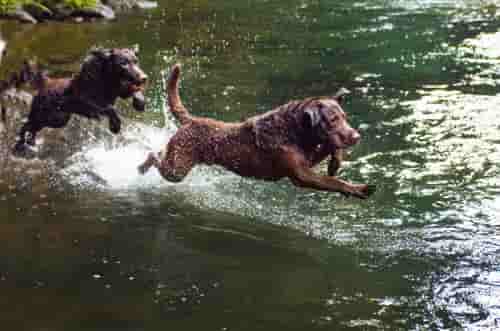 Chessies Doing What They Love!
Physical Stats of the Chessie
Height: males: 23-26 inches, females: 21-24 inches
Weight: males: 65-80 lbs, females: 55-70 lbs.
Color variations: Various shades of brown or sedge, though the most favored color
would be one that blends in with the terrain in which the dog works, which is often described as dead grass or hay.
Coat and Grooming
The outer coat is short, thick, very coarse and partly wavy except on the face and legs, while the undercoat is dense, though quite fine and woolly.
The coat is ideally suited for working in bad weather and cold waters and dries easily with merely a shake.
The Chessie sheds a substantial amount and even more during seasonal sheddings. Regular brushing with a high quality pin brush will maintain the coat and remove loose hair while being easy on your pooch.
Bathe occasionally or just when necessary, but use a low-lather shampoo to prevent stripping coat of natural oils which make his coat waterproof and protect him in the cold water.
Health Notes
This large and powerful dog has a lifespan of 12 to 14 years.
If the CBR leads the highly active lifestyle he was bred for, he will need a very nutritious diet to live to this potential, plus good medical care along the way to monitor his health.
Some of the canine diseases that may affect this breed include:
- Hip and elbow dysplasia
- Degenerative Myelopathy
- Progressive Retinal Atrophy and potentially other hereditary eye diseases
- EIC (Exercise induced collapse)
- Good breeders will have puppy parents (sire and dam) evaluated for all the tests that are available for these and other conditions including eyes before breeding. Buyers should ask to see certificates verifying testing.
Much of the testing can be done by the Orthopedic Foundation for Animals OFA


How Active Are Chesapeake Bay Retrievers?
The CBR is probably the most powerful, intelligent and energetic of the entire retriever family.
While relatively quiet indoors, Chessies have awesome stamina and need plenty of exercise. In addition to a twice daily vigorous walking routine, involvement in some kind of retrieving activity or field trials is a must.
Your Chessie will love the opportunity to swim and retrieve balls or sticks from the water and it is a perfect game for his high energy. Just be prepared to get tired before he does!
Without sufficient physical and mental stimulation, watch out for undesirable behavior!
.
Ideal Living Conditions
The Chesapeake Bay Retriever is not a suitable breed to house in small quarters such as an apartment or condo.
Ideally, he needs to have access to a significant yard and plenty of room to run. Access to a body of water where dogs are allowed to swim would be the optimum.
Suitable Companion For Children?
The Chessie will do best when the head of his pack has accustomed him to the behaviors of both young and older children. And, likewise, the children have been taught how to act responsibly around pets, especially large ones.
The best policy in families where children interact with pets, is to always have adult supervision, no matter what the
breed of dog.
Senior or Less Active Families
While the Chesapeake Bay Retriever is a loyal and protective dog breed, the high exercise requirement, plus the need for very self-assured leadership, would not make this the most suitable breed for the less active lifestyle.
Share Your Knowledge
The Chesapeake Bay Retriever is an uncommon breed so If you're a proud owner or fancier of a Chessie, we'd really like to hear from you.
Please tell us what drew you to the breed, the ins and outs of training and living with your dog on a day to day basis. plus the pros and cons a prospective owner should consider before deciding if it would be a good match for them.
This type of information would be enormously helpful to someone researching the breed for their family.
You can tell your story here.
Book Recommendation
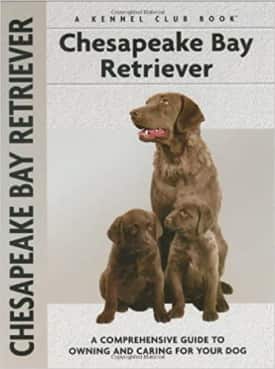
Up-to-date resource covering the breed's characteristics, grooming,
selection, nutrition, healthcare, house training and basic commands. Comprehensive guide
for the novice owner or someone considering the breed.
Written by a respected breeder who provides the pros and cons of Chessies for greater insight into to this workaholic dog!.

commission at no extra cost to you.